Trading Psychology Journal: Track Emotions to Improve Discipline
How to journal emotions, energy and rule adherence before and after each trading session, and how to turn those notes into better trading discipline.
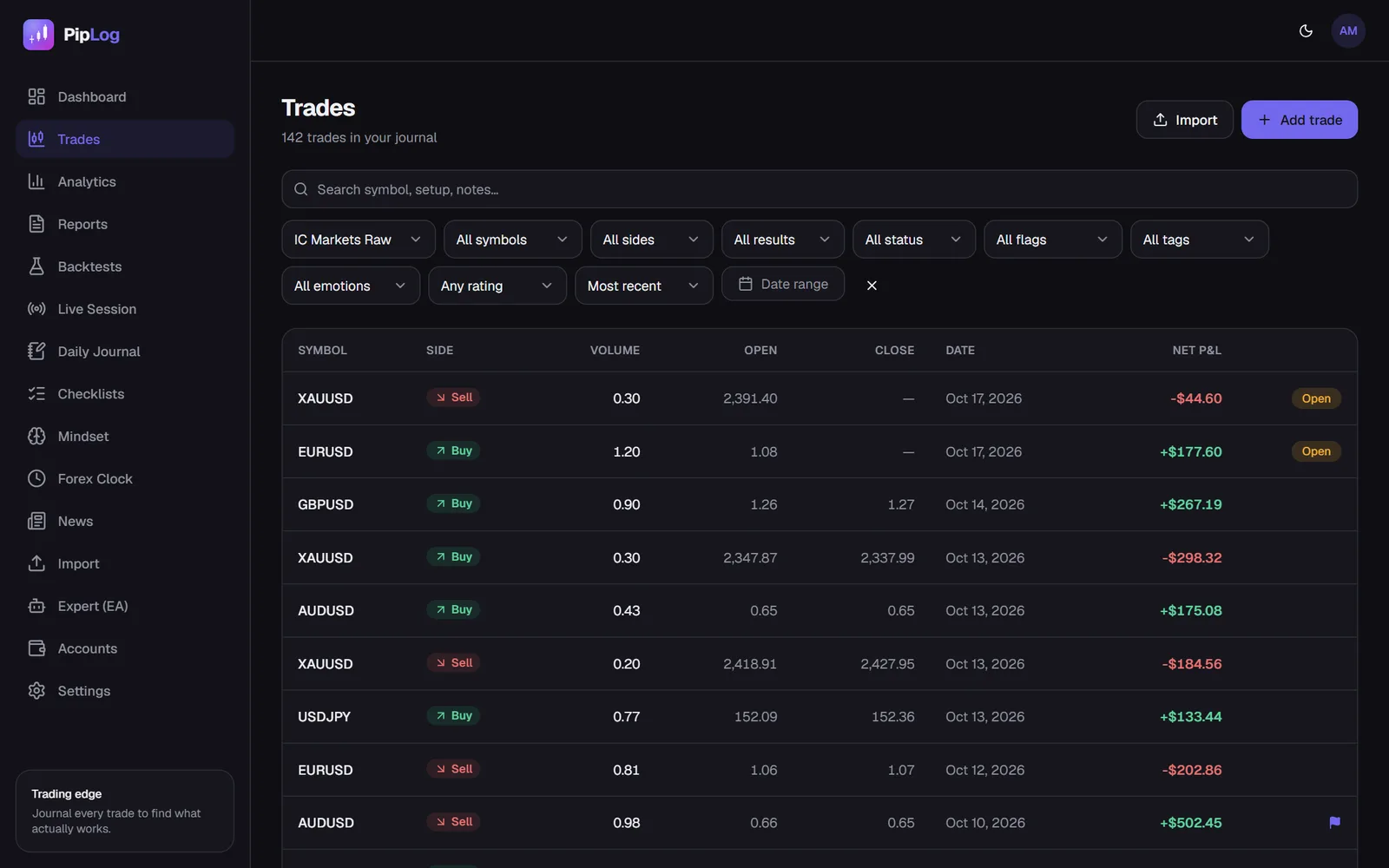
Most traders who fail don't fail because their strategy has no edge. They fail because they can't execute it consistently: they hesitate on good setups, chase bad ones, cut winners early and let losers run. That's trading psychology, and the most practical tool for improving it is a journal.
Not a trade log. A journal about you, the person pressing the buttons.
Why emotions belong in your journal
Emotions aren't the enemy. Fear keeps you from oversizing; excitement can reflect a genuinely good setup. The problem is when emotions make decisions your rules should be making.
You can't manage what you don't measure. When you log your emotional state consistently, you can compare it with your results and see, in numbers, which states lead to your best and worst trading.
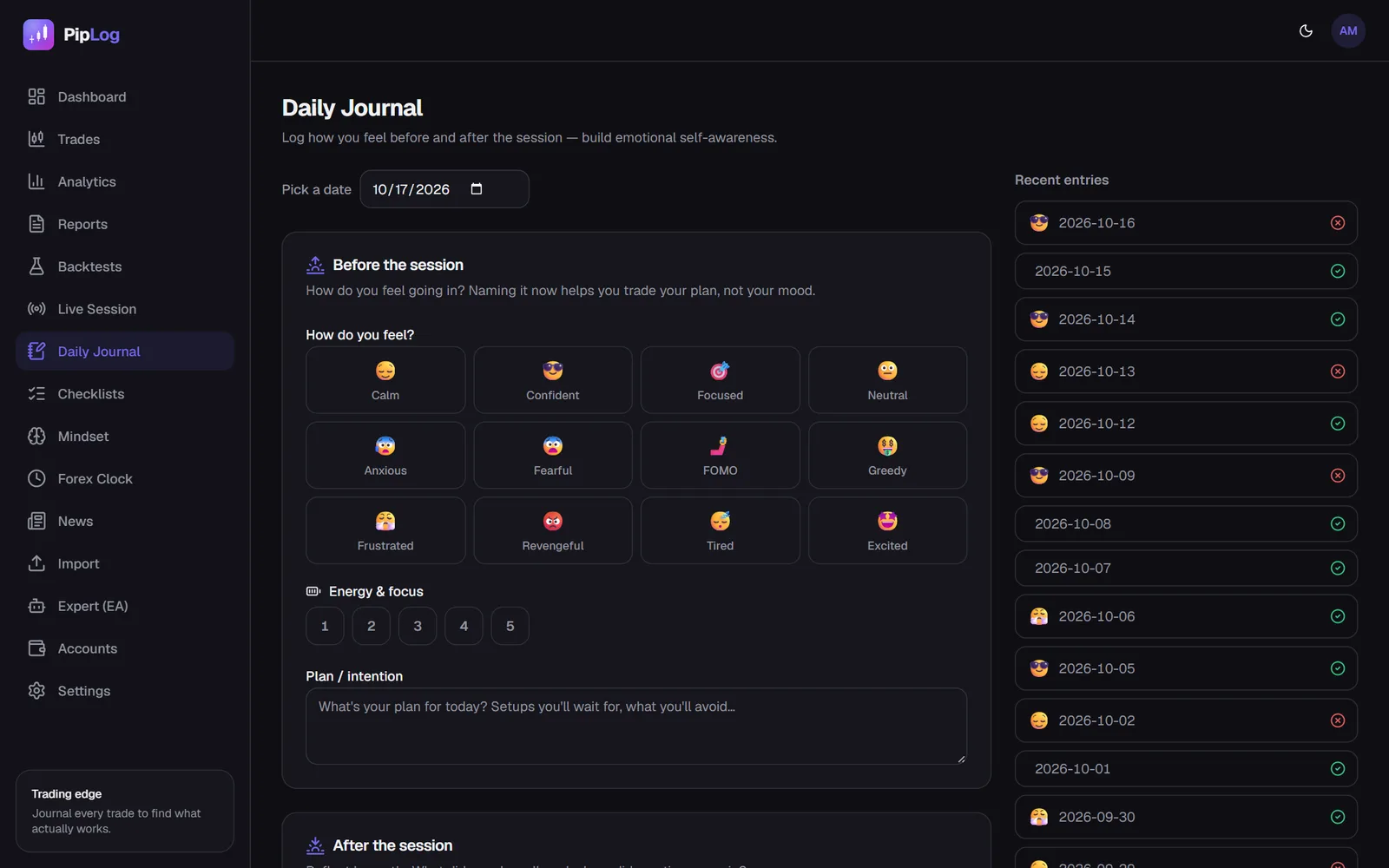
The pre-session check-in
Before you open a chart, take two minutes to record:
- Mood: calm, confident, anxious, tired, frustrated, FOMO
- Energy / focus: 1 to 5
- Plan: which markets, which setups, maximum trades and maximum loss for the day
- Anything unusual: bad sleep, stress at work, a big loss yesterday
This does two things. It makes you consciously aware of your state, and it creates data you can analyse later.
The post-session reflection
After the session, before you check your P&L in detail:
- Mood after: satisfied, calm, frustrated, euphoric
- Reflection: what happened, in two or three sentences
- Lessons: one thing you learned
- Mistakes: rules broken, if any
- Did I follow my rules? Yes or no
The yes/no question is deceptively powerful. After a few weeks, compare your average daily P&L on rule-following days with rule-breaking days. The gap is usually large enough to change behaviour on its own.
Per-trade emotions
For each trade, record the emotion you felt at entry. Use a short, fixed list so you can analyse it: calm, confident, disciplined, anxious, FOMO, frustrated, greedy.
After 50 or more trades, group results by emotion. A typical finding:
| Emotion at entry | Win rate | Avg R |
|---|---|---|
| Calm | 51% | +0.42R |
| Confident | 48% | +0.31R |
| Anxious | 39% | −0.08R |
| FOMO | 31% | −0.47R |
Illustrative numbers. The exact values will be yours, but the pattern of FOMO and anxiety trades underperforming is very common.
Patterns to look for
Emotional carry-over
Do losses on Monday lead to bad trading on Tuesday? Look at the day after your worst days.
Time-of-day fatigue
Do your results fall off after two or three hours at the screen? Many traders are profitable in the first hour of their session and give it back later.
Tilt sequences
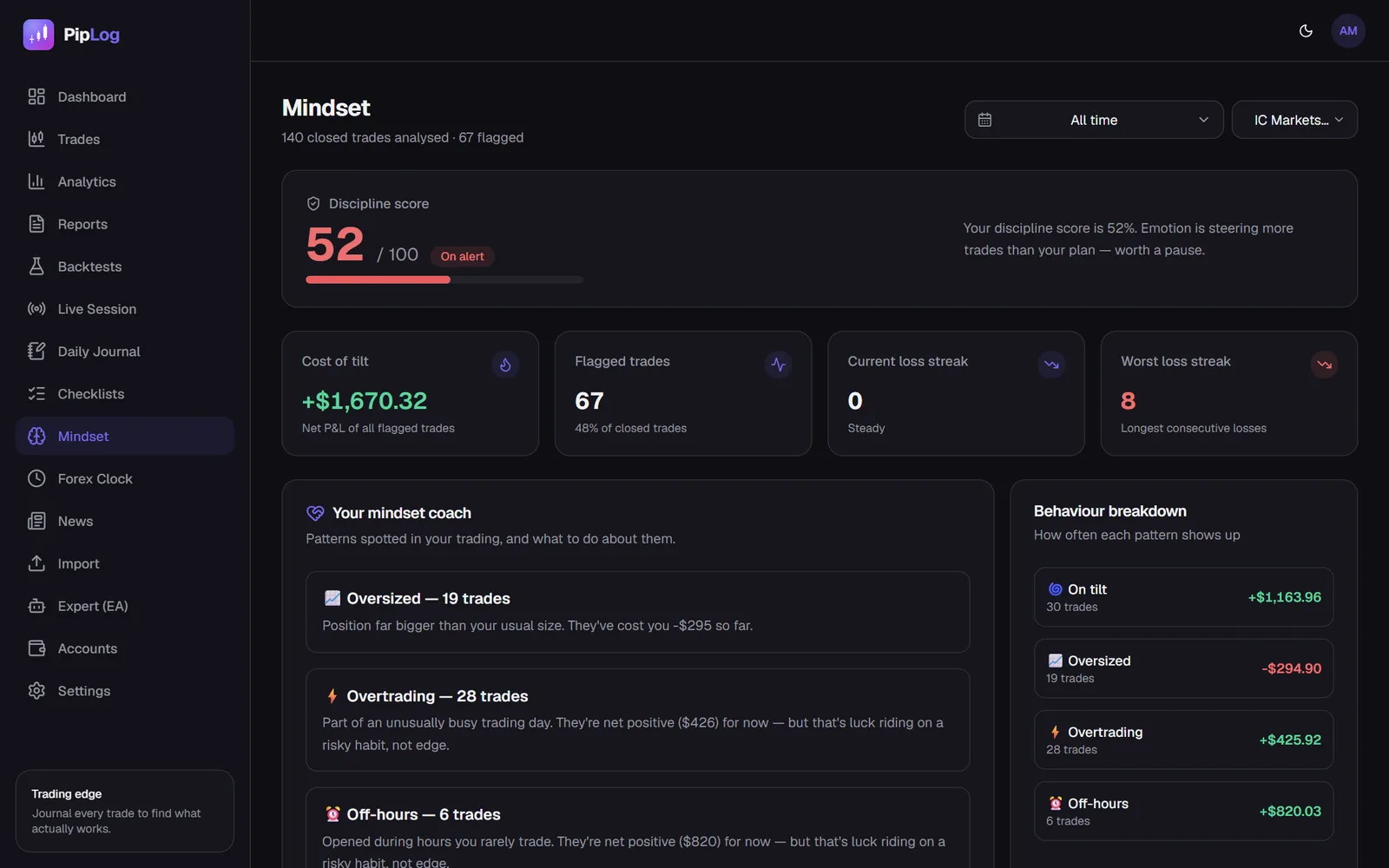
Faster trades, larger size and more trades after a loss are classic tilt. PipLog's mindset view detects these sequences automatically; see revenge trading.
Overconfidence after wins
Winning streaks can be as dangerous as losing streaks. Check whether your position size or trade count rises after a strong week.
Turn insights into rules
A journal entry that doesn't change behaviour is a diary. Every month, turn your strongest finding into a concrete rule:
- "If pre-session energy is 2 or below, max 1 trade at half size."
- "After two losses, the session is over."
- "No trades in the first 15 minutes after a major news release."
- "No trades after 3 hours at the screen."
Then add the rule to your pre-trade checklist or your live session limits, so it's enforced rather than remembered.
Keep it light
Psychology journaling fails when it becomes a chore. Keep each check-in under two minutes, use fixed lists instead of free text where you can, and write freely only for lessons and reflections.
Journal your MT4 & MT5 trades automatically
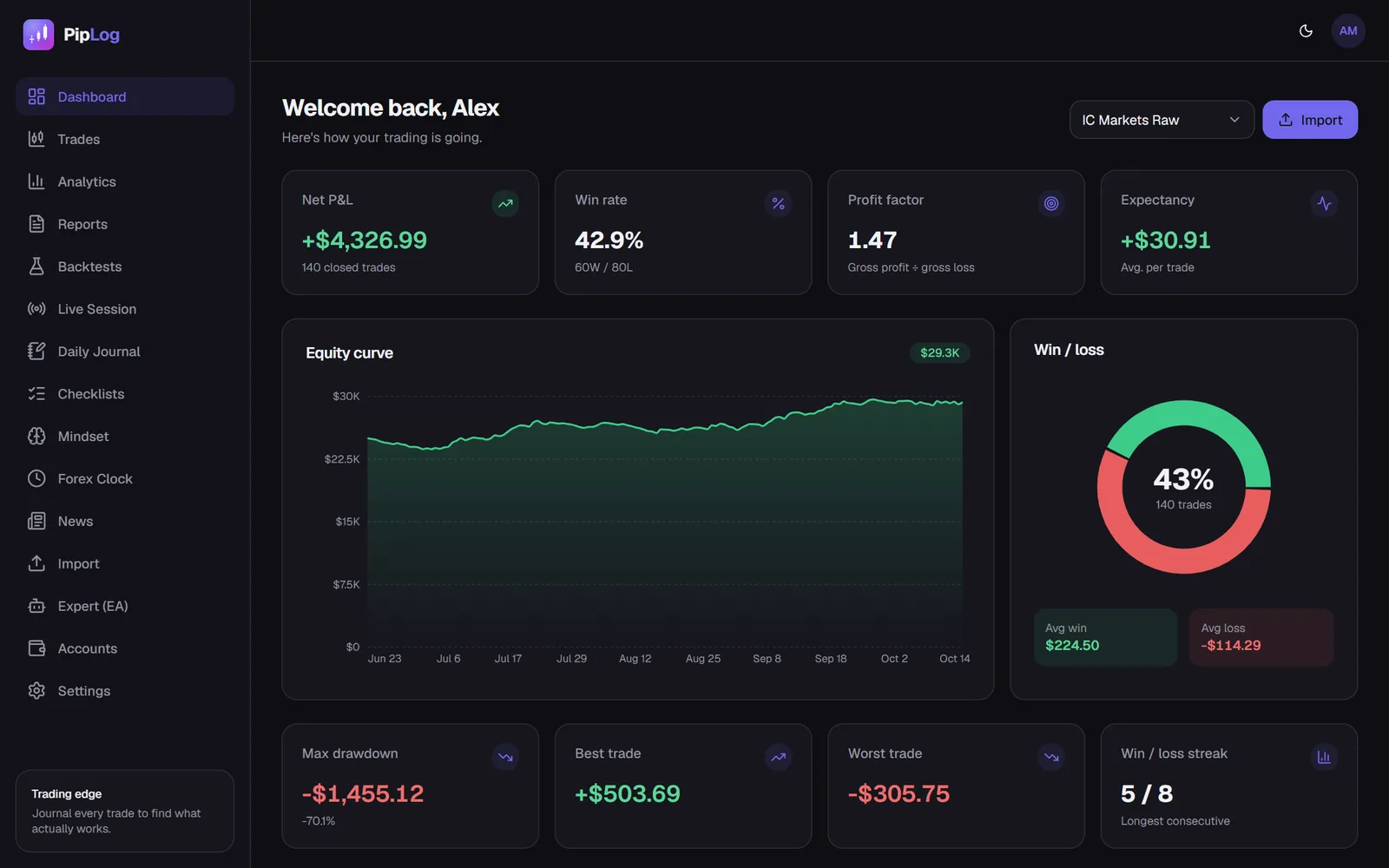
Import a statement or sync live with the PipLog EA. Win rate, profit factor, expectancy and drawdown are calculated for you.
Start your journalKey takeaways
- Journal your state before and after each session, not just your trades.
- Track emotion per trade with a fixed list, and compare results by emotion.
- "Did I follow my rules?" is the most useful single question in a trading journal.
- Turn each month's biggest insight into one enforceable rule.