Journaling5 min read
How to Keep a Trading Journal: A Step-by-Step Guide for Forex Traders
What to record, when to review it and how to turn a trading journal into better decisions. A practical guide for MT4 and MT5 traders.
PipLog Blog
Guides for MT4 and MT5 traders: keeping a trading journal, exporting history, profit factor, expectancy, drawdown, risk and trading psychology.
What to record, when to review it and how to turn a trading journal into better decisions. A practical guide for MT4 and MT5 traders.
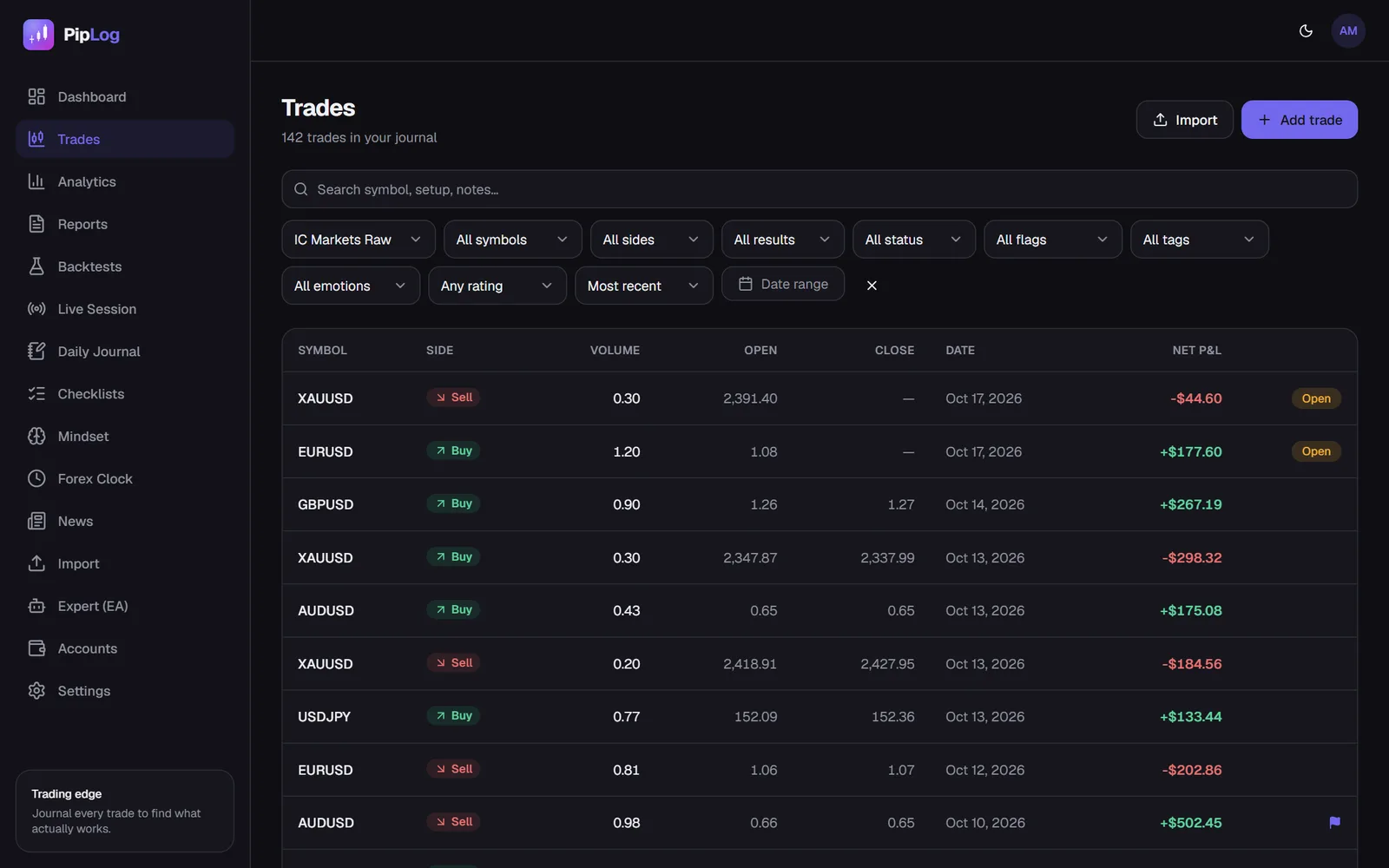
Three ways to build an MT5 trading journal, from statement imports to live sync with an expert advisor, and what to look for in a journal for MetaTrader 5.
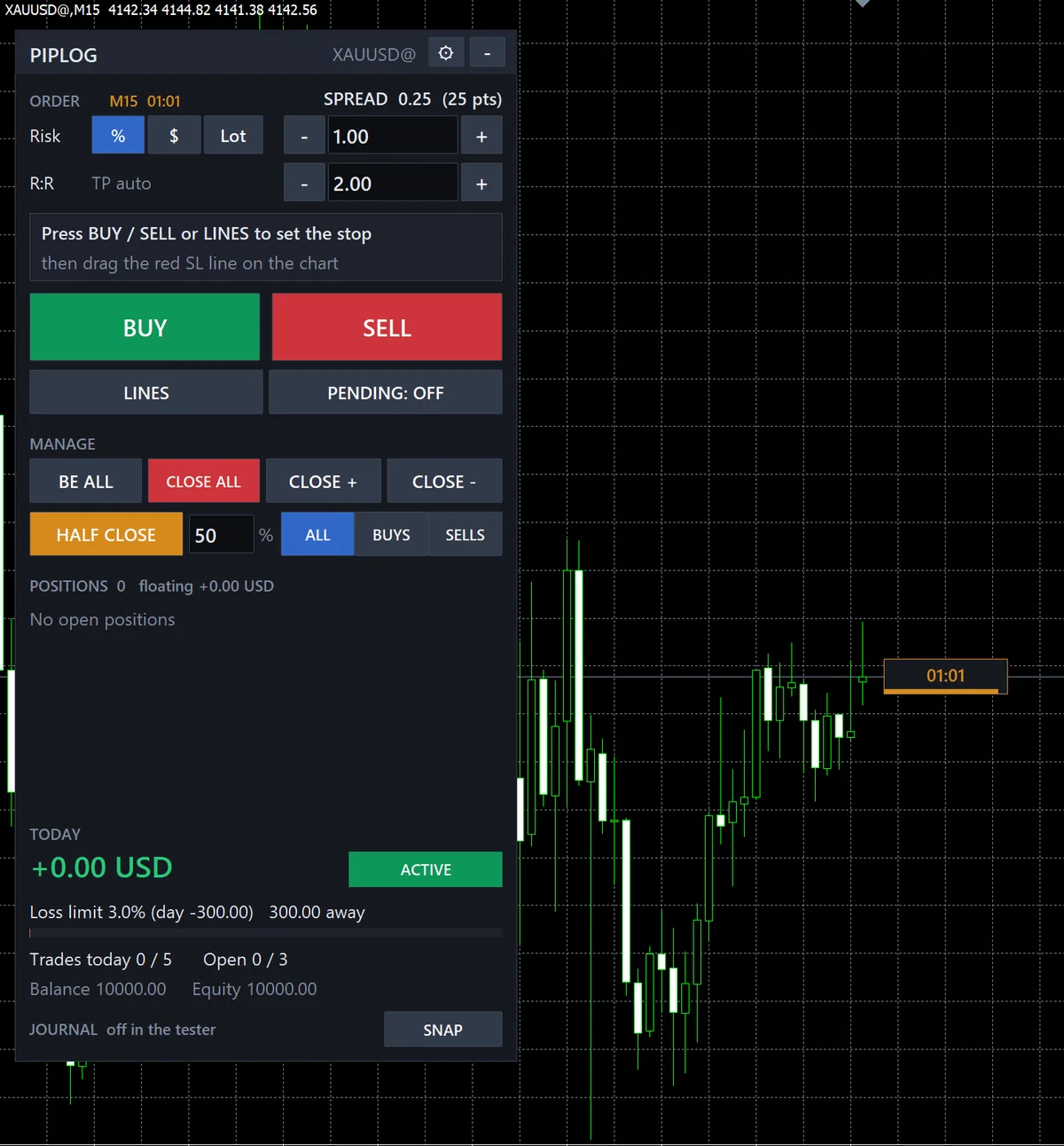
How the PipLog expert advisor for MetaTrader 5 sizes orders by risk, enforces a daily loss limit, manages break-even and partials, and syncs your journal.
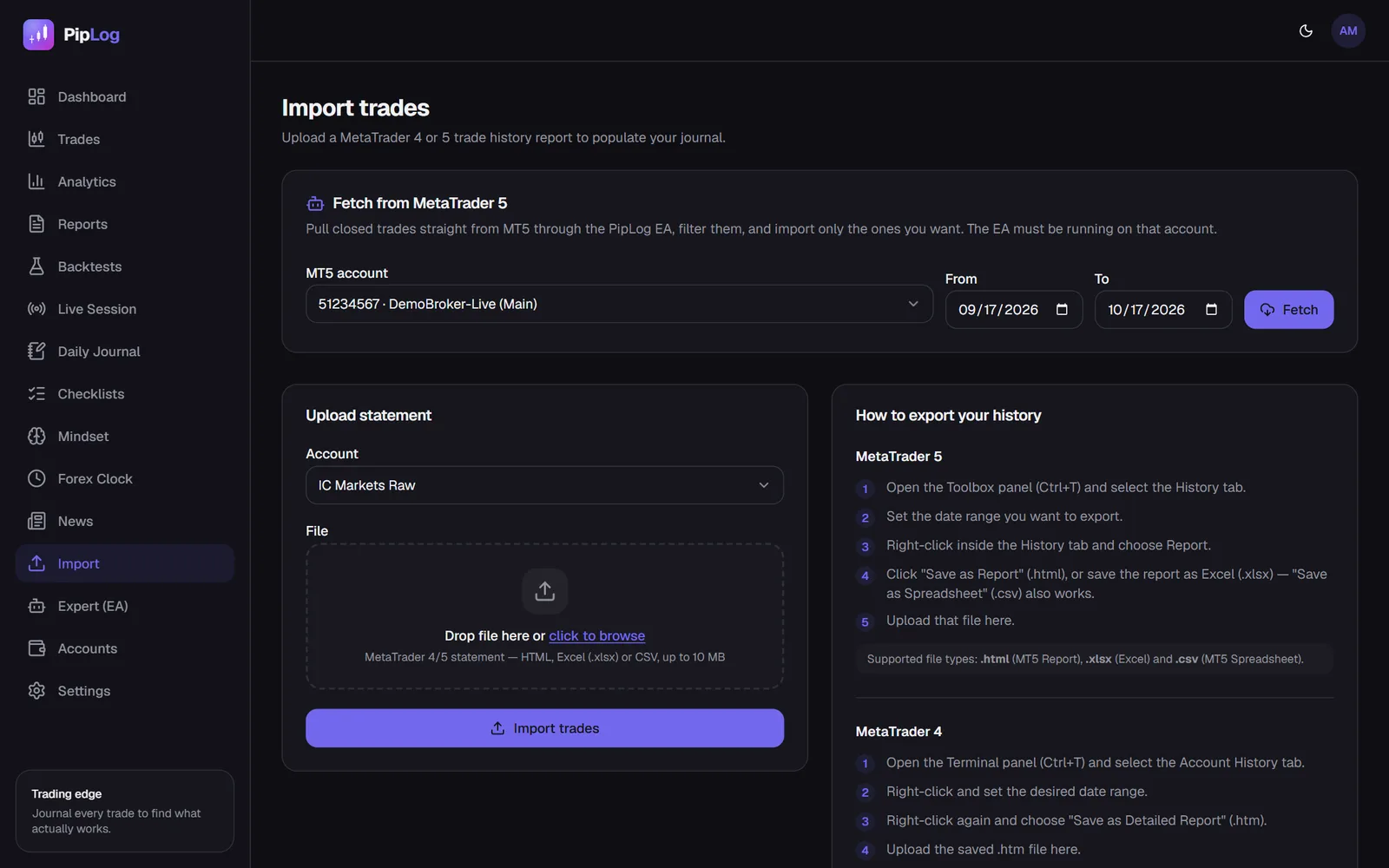
Step-by-step: export your MT5 trade history as an HTML or Excel report, pick the right date range, and import it into a trading journal without duplicates.
Export your MetaTrader 4 account history as a Detailed Report in four clicks, fix missing trades, and import the statement into a trading journal.
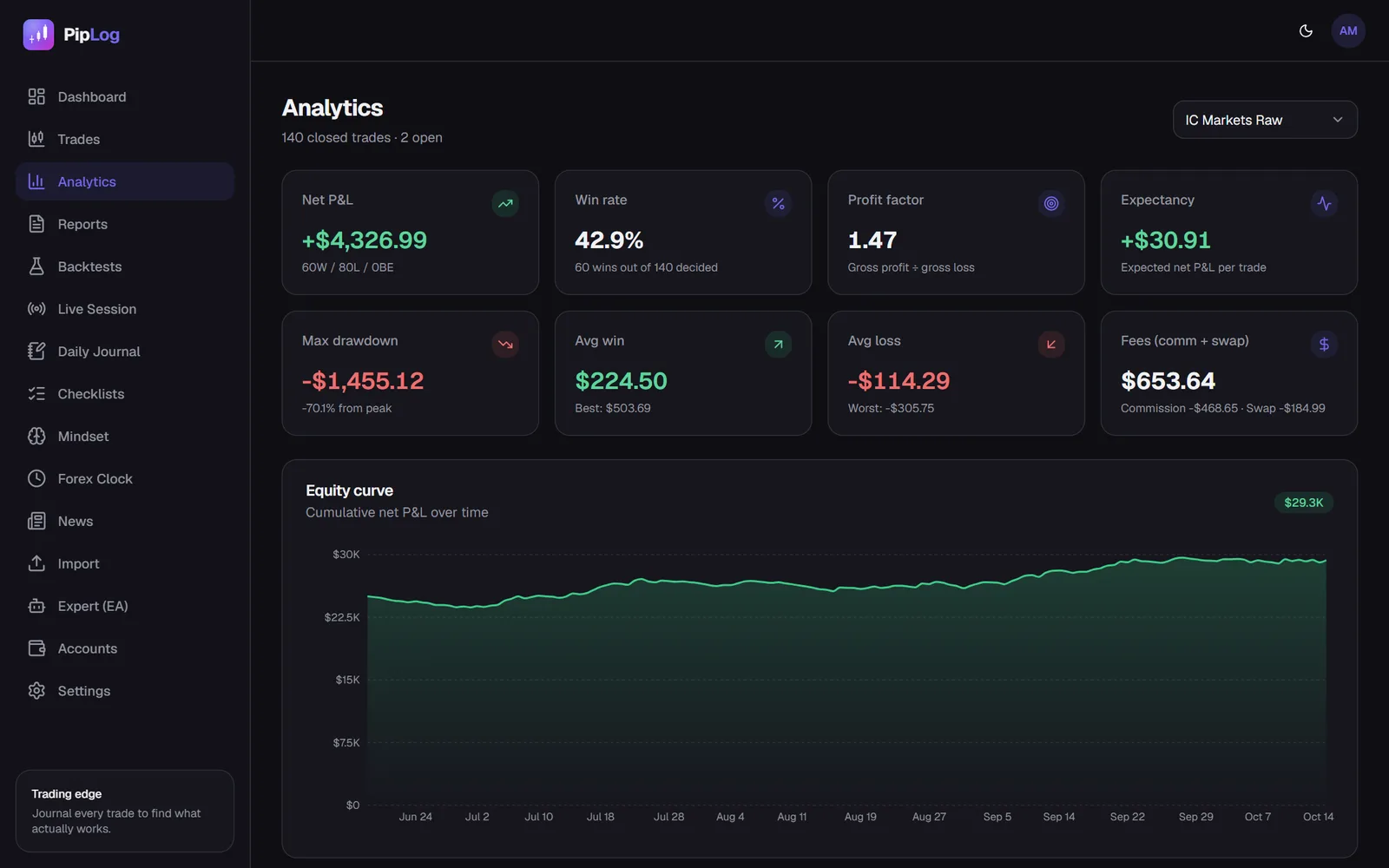
Win rate, profit factor, expectancy, drawdown, average R and more: what each trading metric means, how to calculate it, and what a good value looks like.
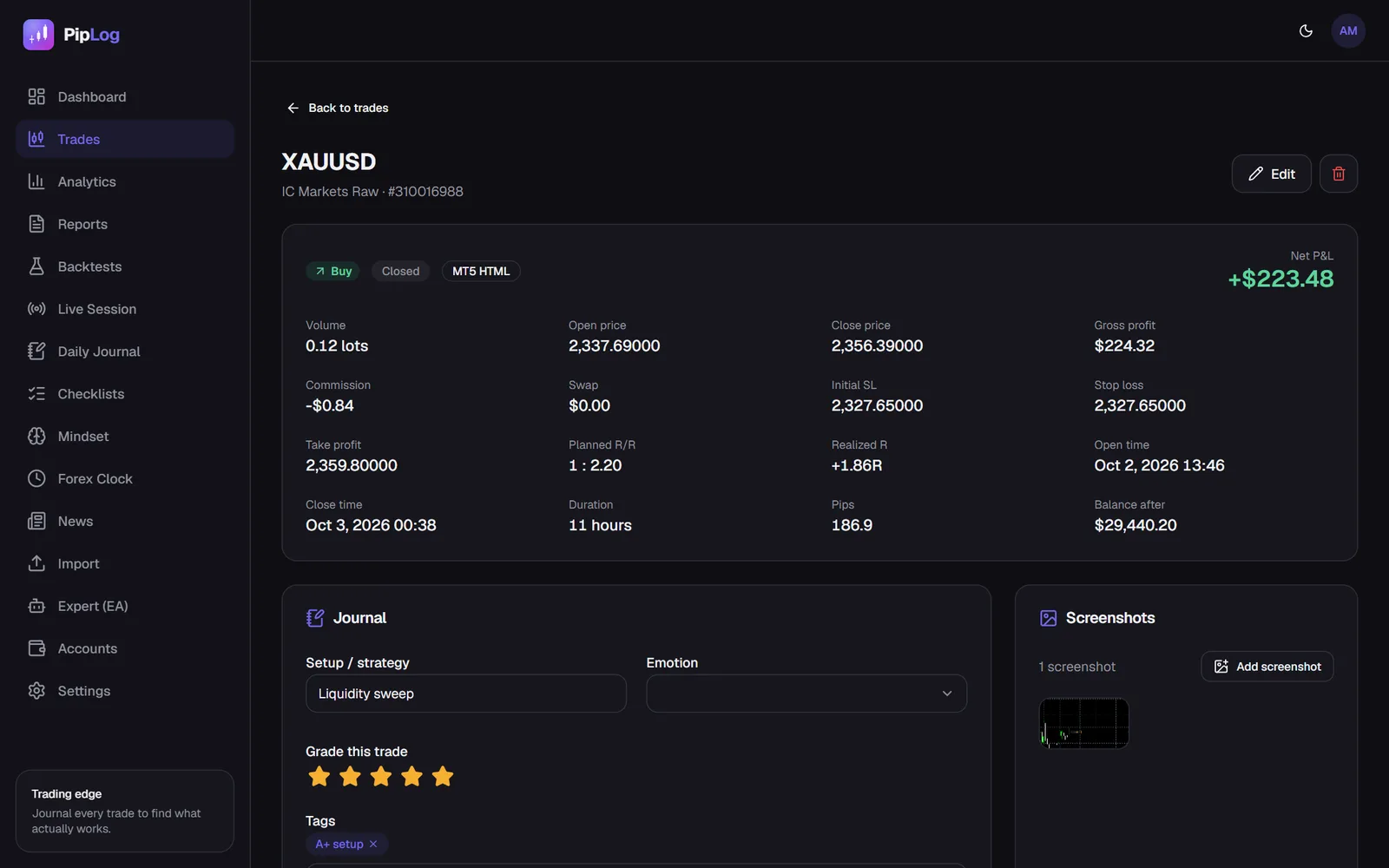
A practical trading journal template for forex, gold and indices traders: the trade fields, the context fields and the daily review questions to include.
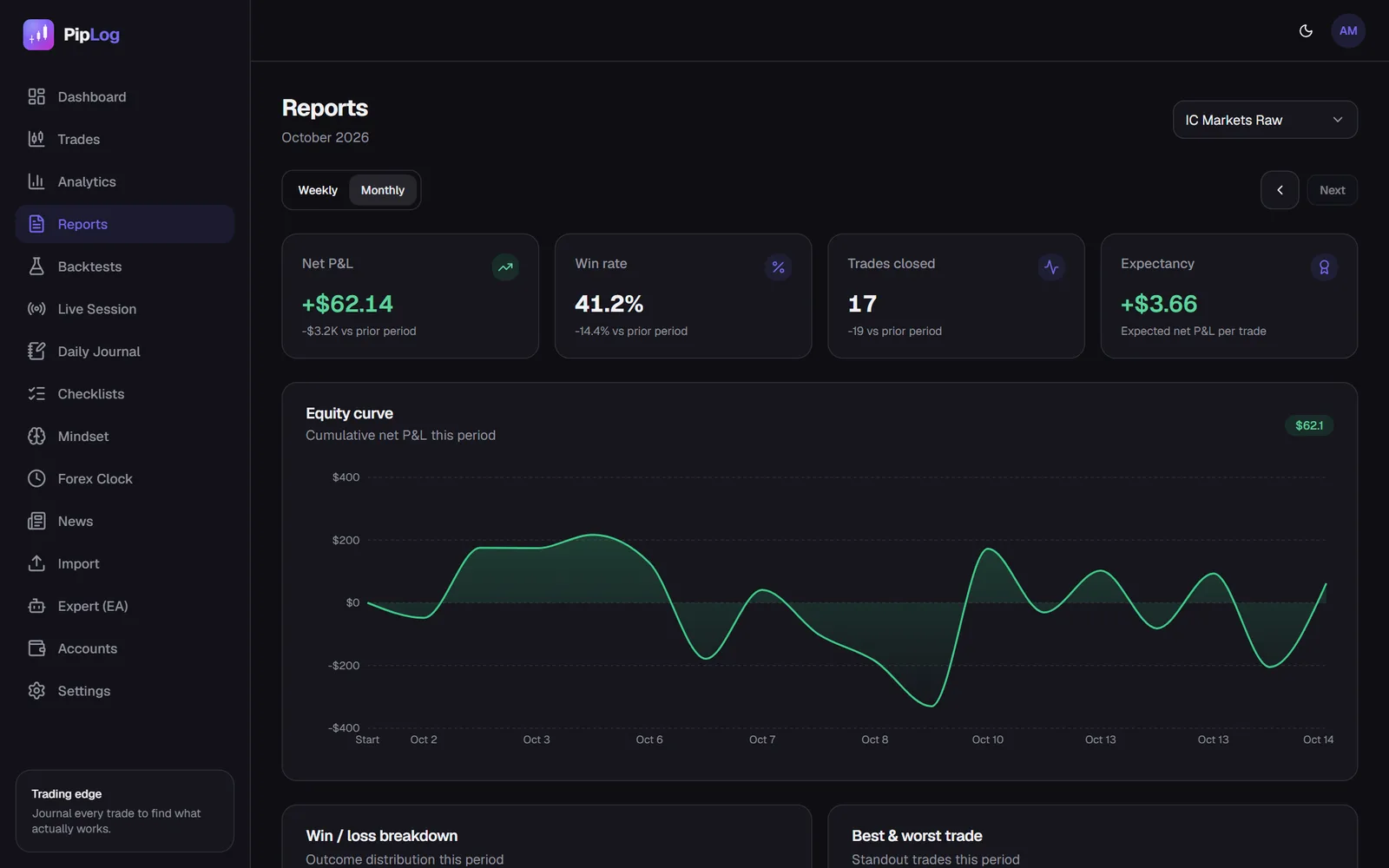
Profit factor is gross profit divided by gross loss. Learn how to calculate it, what a good profit factor is for forex traders, and its blind spots.
Expectancy combines win rate and risk-reward into one number: what you make per trade on average. Formula, examples, and the break-even win rate table.
An R-multiple is a trade's result divided by its initial risk. Learn how to calculate R, why it beats dollar P&L for reviewing trades, and how to use it.
Maximum drawdown is the largest peak-to-trough fall in your equity. How to calculate it, the recovery maths, and practical ways to limit drawdowns.
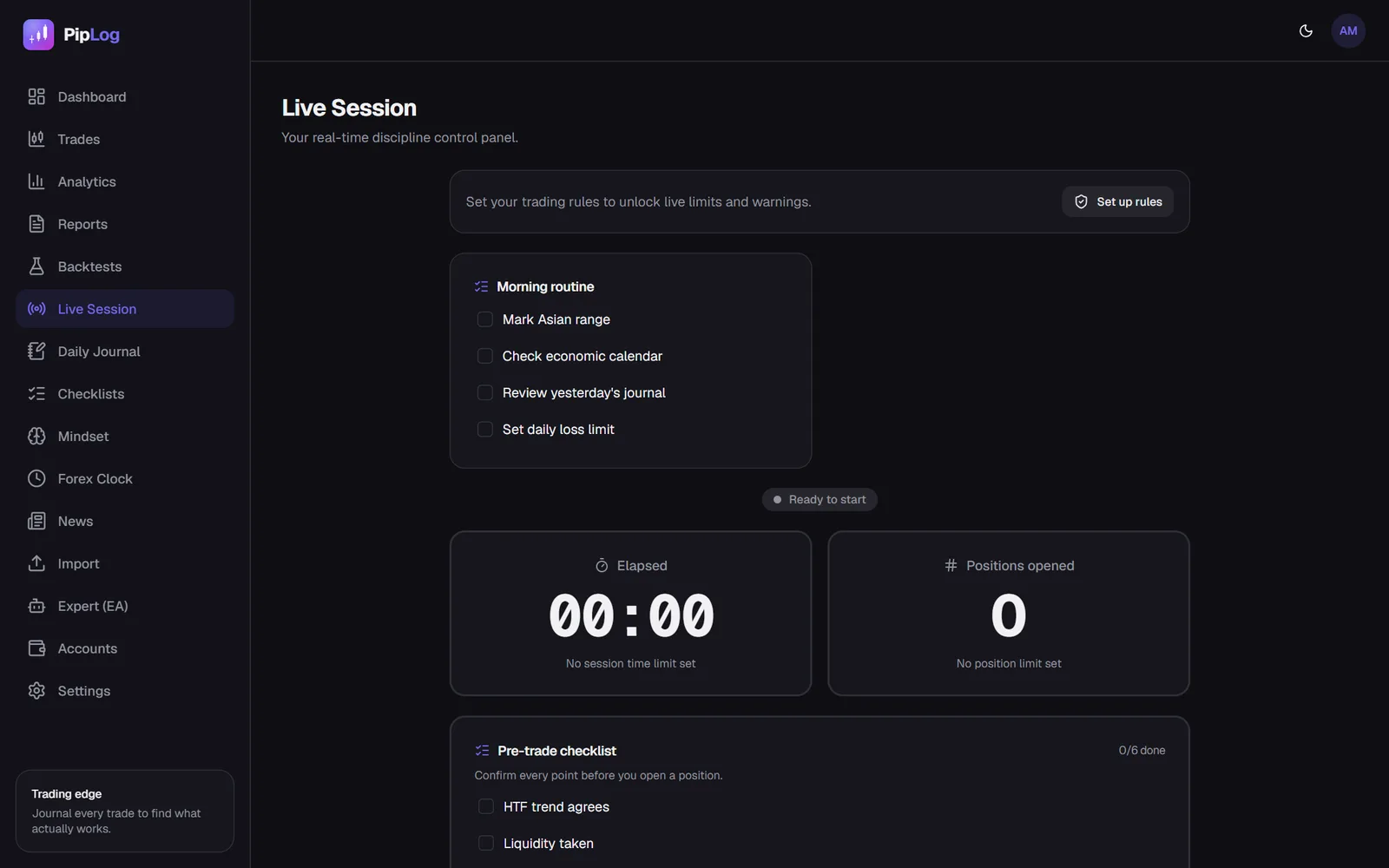
Calculate the right lot size for any forex pair, gold or index from your account risk and stop loss, with worked examples and common sizing mistakes.
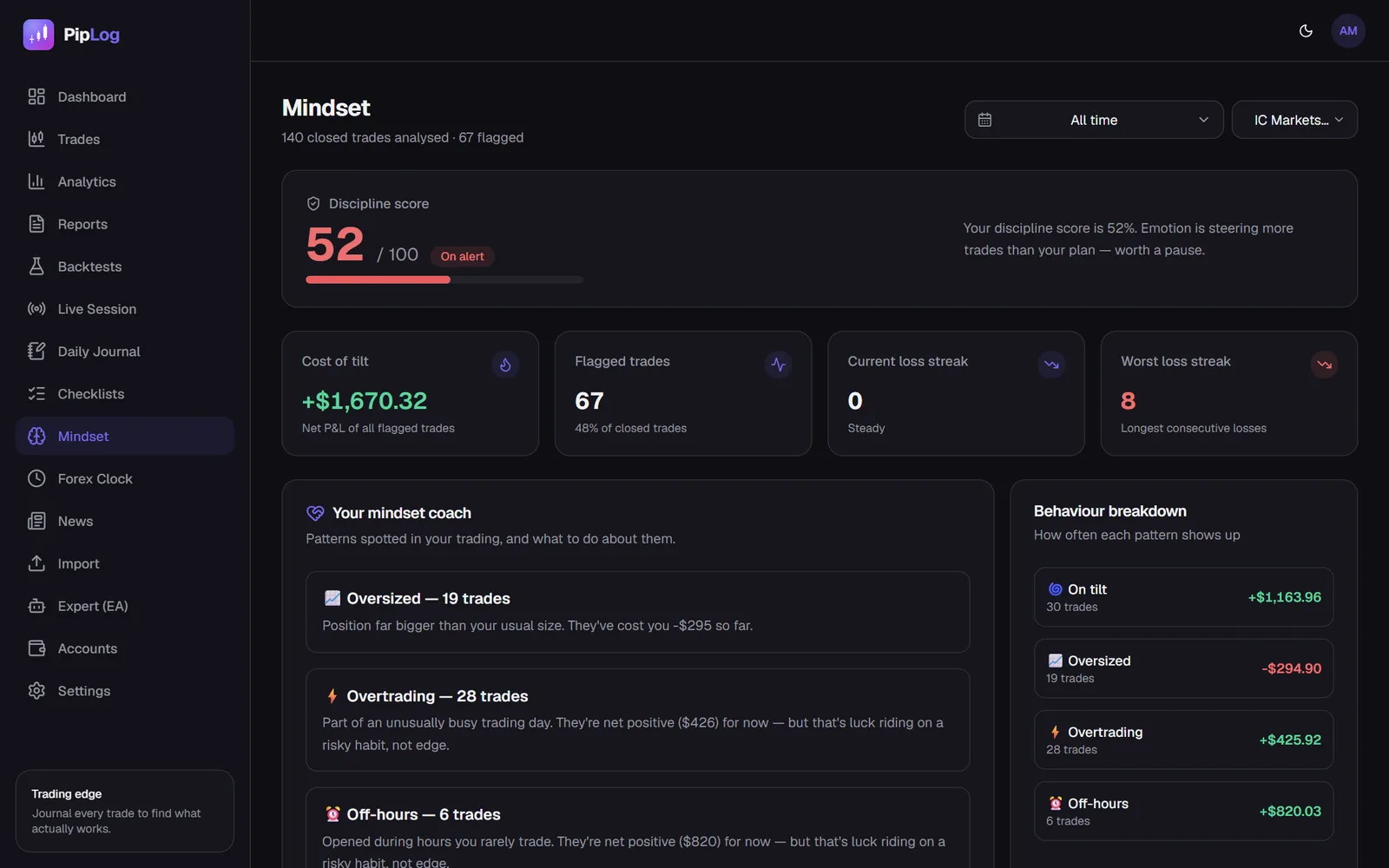
Revenge trading turns a normal loss into a terrible day. Learn the warning signs, how to detect revenge trades in your data, and rules that stop the spiral.
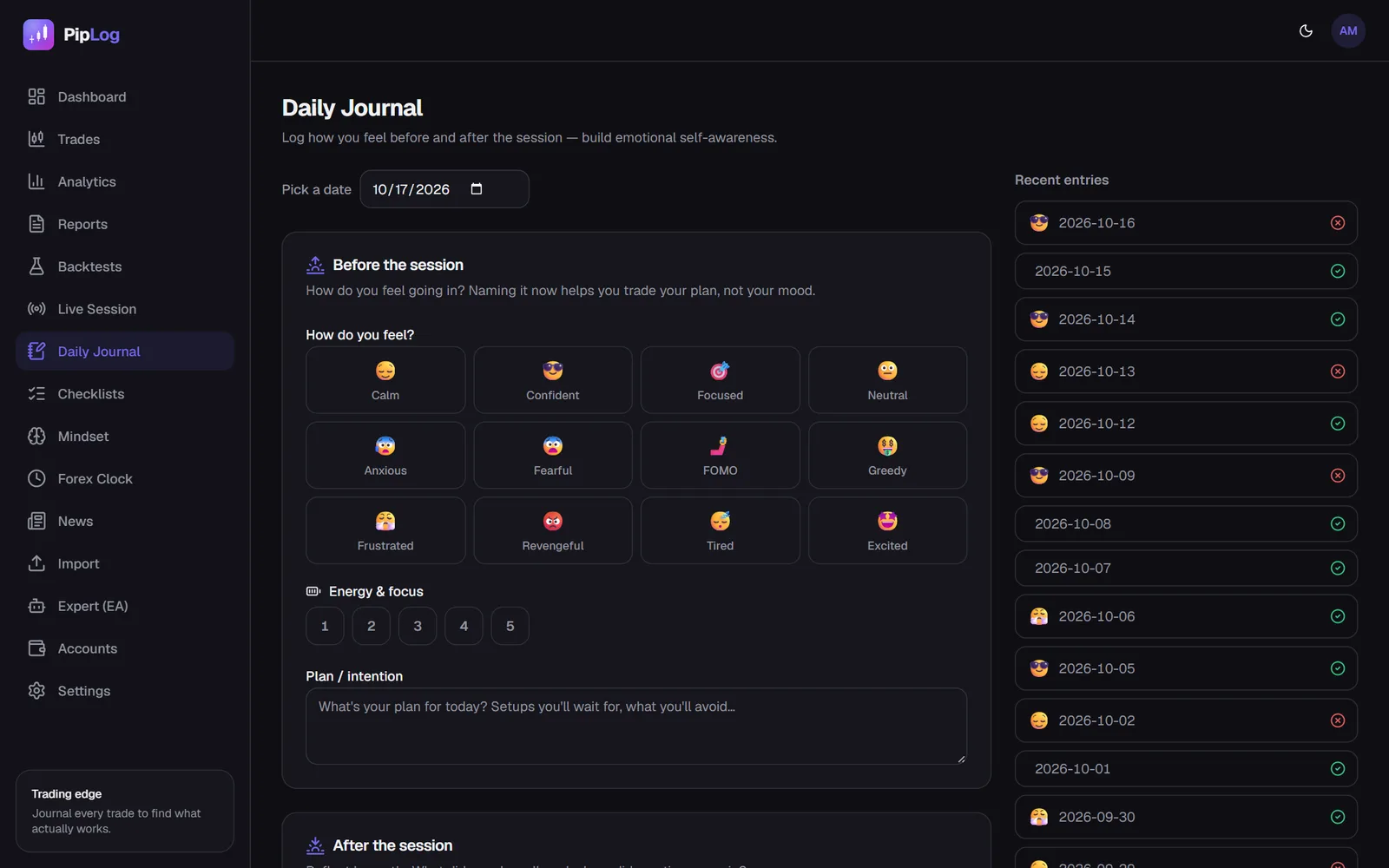
How to journal emotions, energy and rule adherence before and after each trading session, and how to turn those notes into better trading discipline.
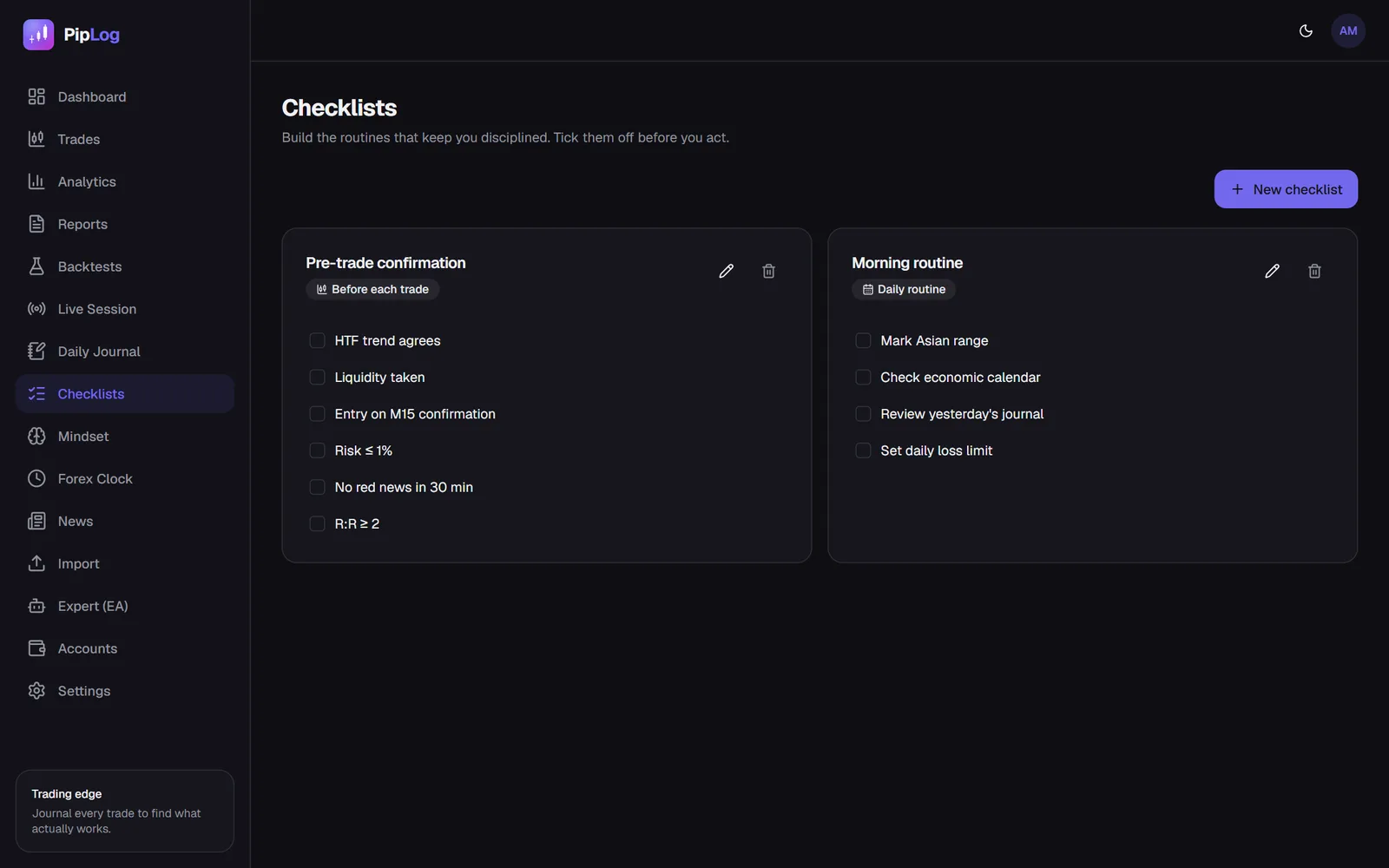
A pre-trade checklist filters out impulsive trades before they happen. How to write one, example checklists for forex traders, and how to enforce it.
Most prop firm challenges are failed on risk rules, not strategy. How daily loss and max drawdown rules work, and a journaling routine to stay inside them.
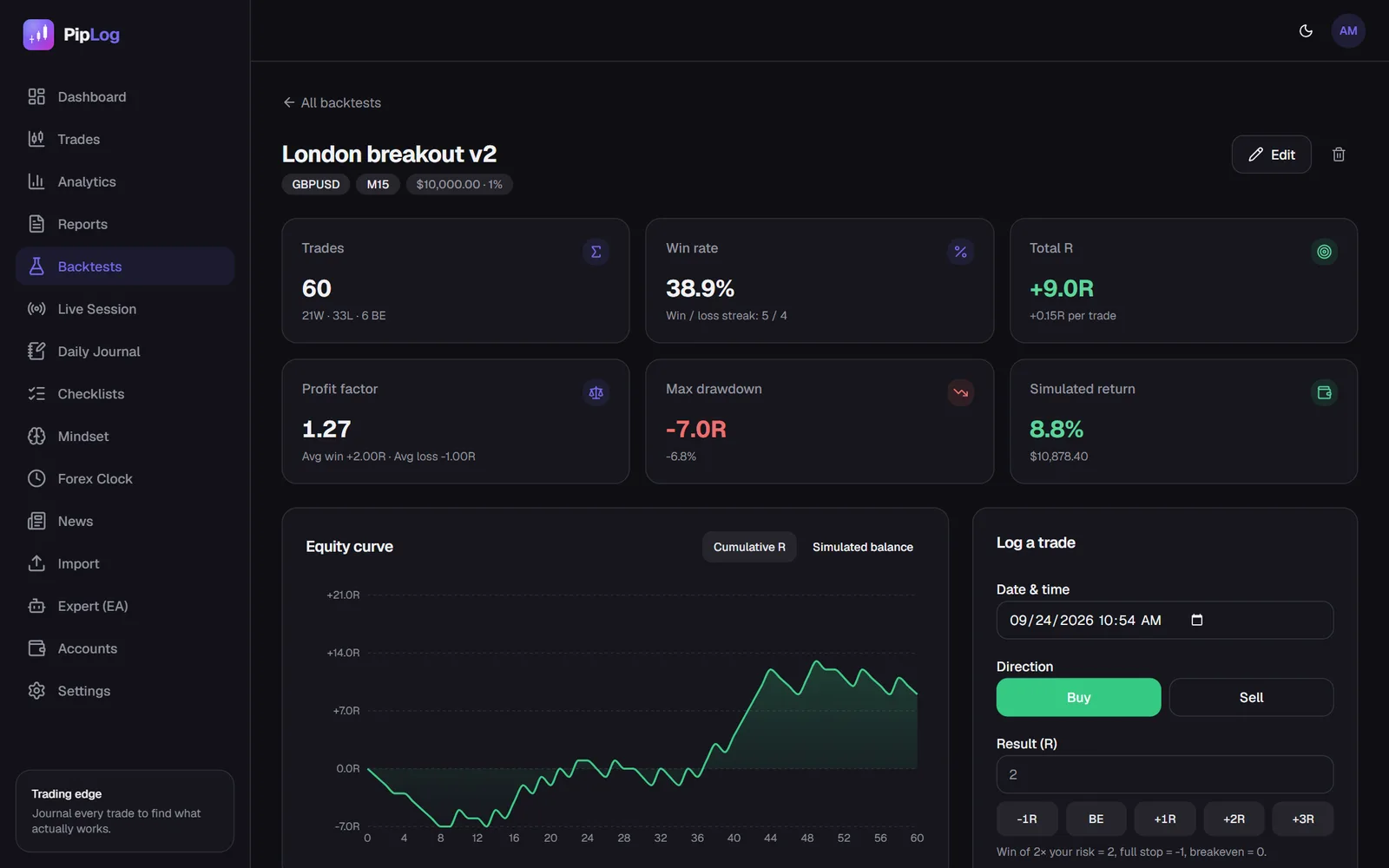
A step-by-step method for manual backtesting: write testable rules, replay charts, log each trade in R, and read the results before risking real money.
Chart screenshots are the most underrated part of a trading journal. What to capture, when, and how to take MT5 screenshots automatically at entry and exit.
Excel and Google Sheets trading journals are free and flexible. Journal apps automate imports and analytics. An honest comparison for MT4 and MT5 traders.
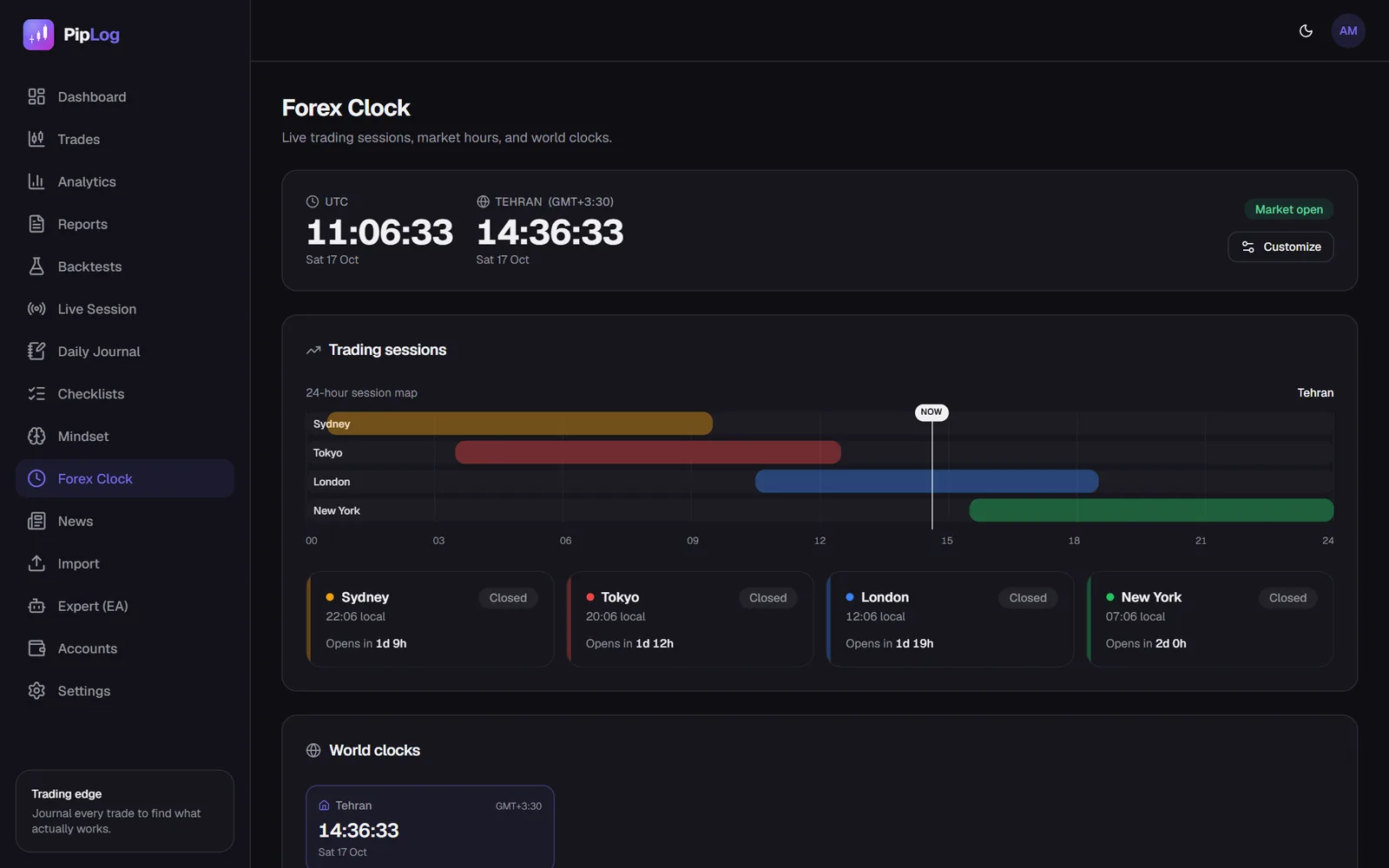
Sydney, Tokyo, London and New York session times in UTC, the overlaps that bring the most volume, and how to find your best trading hours in your journal.