Passing a Prop Firm Challenge: Daily Loss Limits, Drawdown and Journaling
Most prop firm challenges are failed on risk rules, not strategy. How daily loss and max drawdown rules work, and a journaling routine to stay inside them.
Prop firm challenges look simple: hit a profit target without breaking a few risk rules. In practice, most traders who fail don't fail because their strategy can't reach the target. They fail because one bad day breaks the daily loss limit, or a run of losses touches the maximum drawdown.
This guide explains the rules that matter, how to size your risk around them, and how to use a journal to stay on the right side of them.
The rules that end challenges
Each firm has its own rules, so always read yours carefully. Most challenges share three:
| Rule | Common values | What it means |
|---|---|---|
| Profit target | 8 – 10% (phase 1), 5% (phase 2) | Reach it to pass the phase |
| Daily loss limit | Often 4 – 5% | Max loss in a single day |
| Maximum loss | Often 8 – 12% | Max total drawdown from the starting balance (or from the high, for trailing rules) |
Details matter enormously:
- Balance or equity? Many firms measure the daily limit against equity, which includes floating losses on open trades.
- Static or trailing? A trailing maximum loss moves up with your highest balance or equity, which is much stricter.
- When does the day reset? Usually at a fixed server time, which might be in the middle of your session.
Size your risk around the limits, not the target
The profit target tempts you to size up. The loss limits should decide your size.
If the daily loss limit is 5% and you risk 2% per trade, three losses in a day end the challenge. At 0.5% per trade, you can take ten losses in a day and still be inside the limit, which in practice never happens.
A practical approach:
- Set your own daily stop well inside the firm's, for example 2% when the firm allows 5%.
- Risk 0.5% to 1% per trade.
- Cap trades per day at three or four.
With 0.5% risk and a strategy averaging +0.3R per trade, the 8% target takes around 50 to 55 trades. That's two to three weeks of normal trading, and far less stressful than trying to pass in four days.
Enforce the daily limit automatically
The daily loss limit is the rule most often broken, and almost always on a tilt day. Enforcing it with software rather than willpower is the single biggest improvement most challenge traders can make.
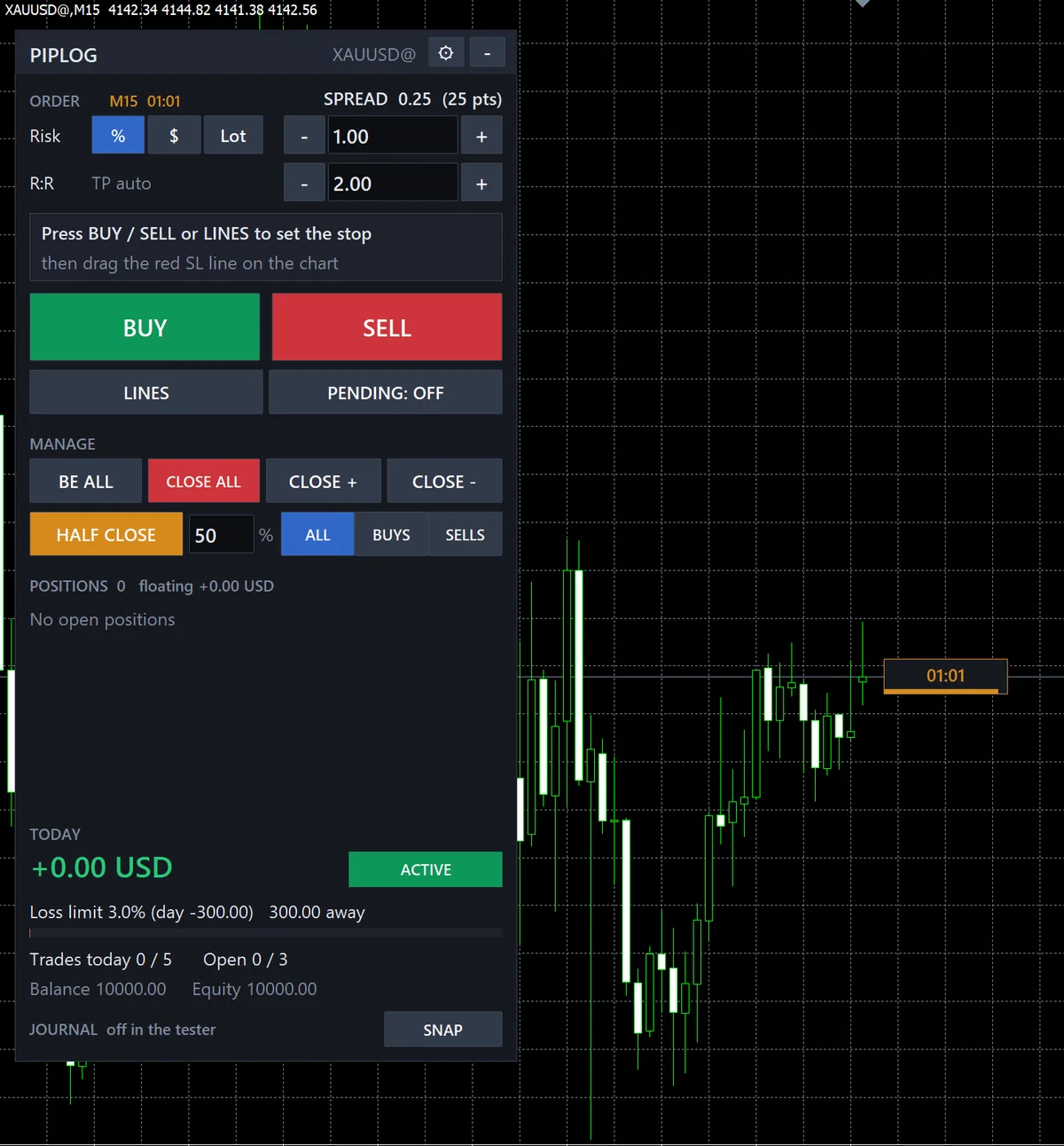
The PipLog EA for MT5 has a daily loss limit measured as a percentage of the day's starting balance. Once the day's loss reaches it, the EA blocks new panel orders for the rest of the day. Combined with trade caps (max trades per day and max open positions), it puts a hard ceiling on how bad a day can get.
Journal the challenge separately
Keep your challenge in its own account in your journal. Mixing it with a personal account makes every statistic meaningless for the challenge.
Track daily:
- Day's P&L as a percentage of the starting balance
- Distance remaining to the daily and maximum loss limits
- Number of trades and whether you followed your plan
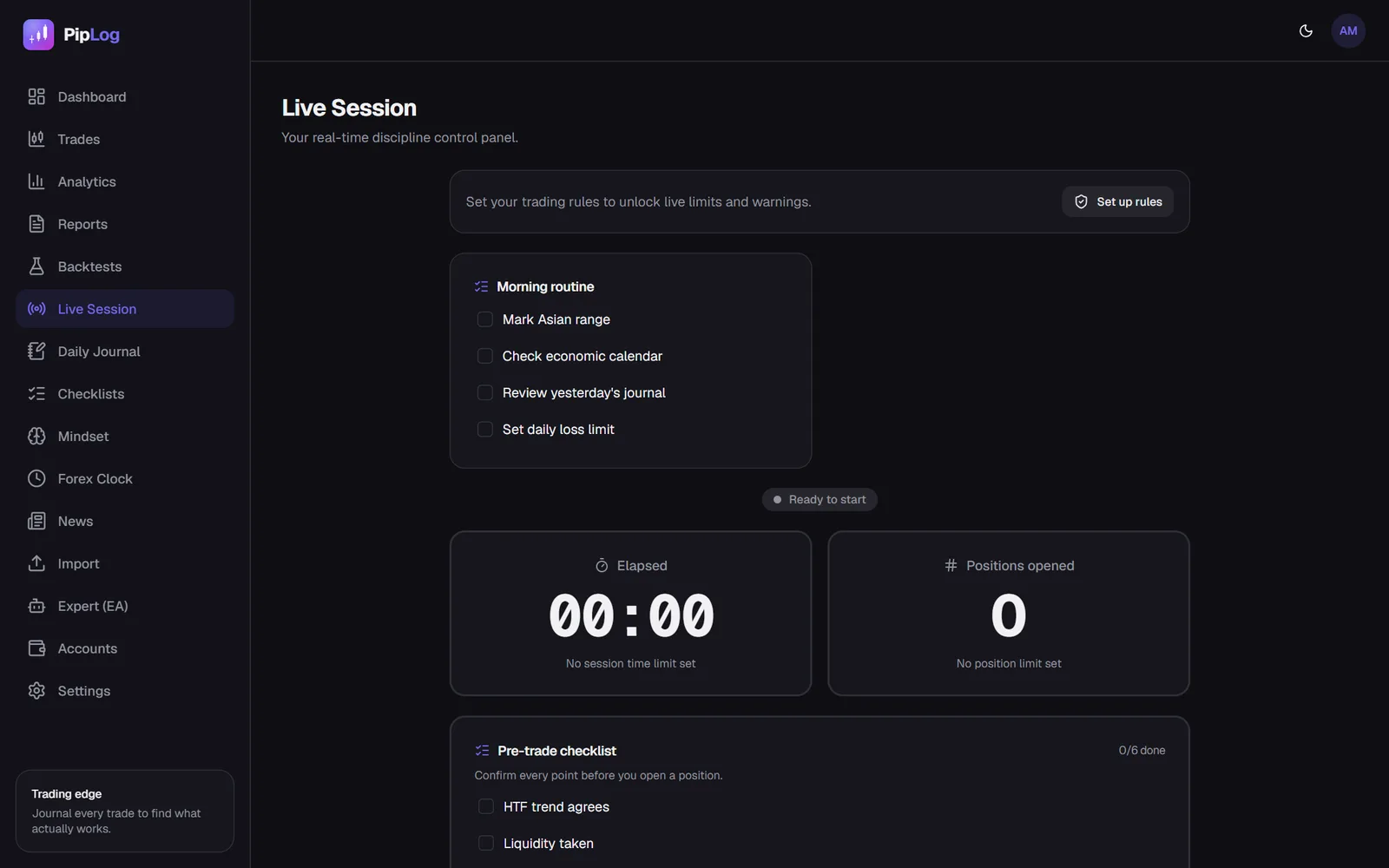
PipLog's live session view tracks session time, positions per session and per day, and risk against the limits you set, and shows a warning as you approach a limit rather than after you've broken it.
The psychology of challenges
Challenges add pressure that normal trading doesn't have: a fee paid, a deadline (sometimes), and a target that feels close. Typical failure patterns:
- Rushing. Sizing up early to "get it done", then hitting the daily limit.
- Protecting a lead badly. Stopping taking good setups when close to the target, then forcing bad ones when time runs short.
- Revenge after a red day. The day after a loss is the most dangerous day of any challenge. See revenge trading.
A short pre-session check-in helps: note your mood, the distance to each limit, and your maximum trades for the day. See trading psychology journaling.
A challenge routine
- Before the session: check the news calendar, note distances to the limits, set your trades cap.
- During: trade only setups on your pre-trade checklist, at fixed risk.
- After a loss: take a 15-minute break and journal the trade before taking another.
- After the session: journal the day and answer "did I follow my rules?".
- Weekly: review average R, rule breaks and the distance to target. Adjust nothing mid-week unless a rule was broken.
Journal your MT4 & MT5 trades automatically
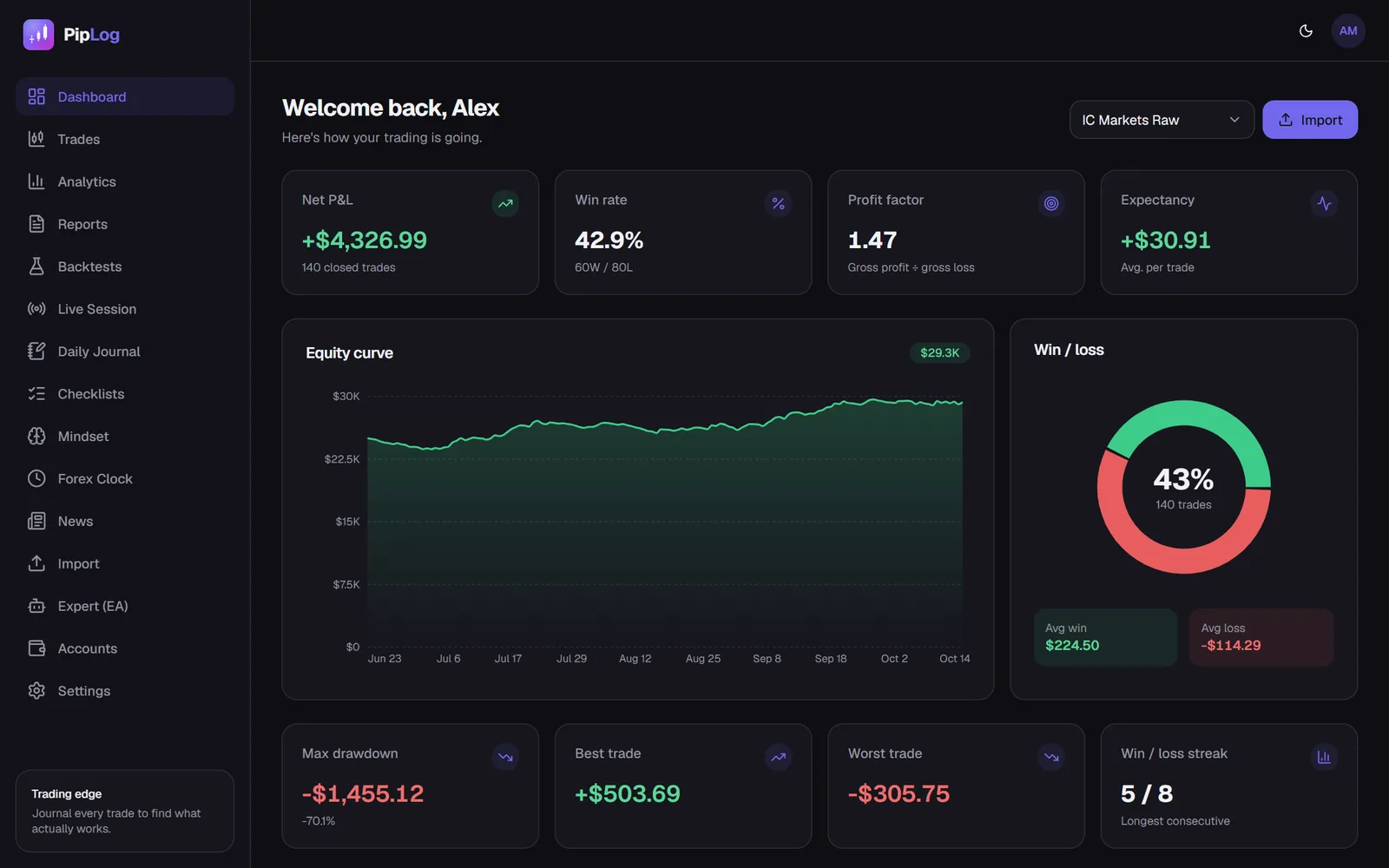
Import a statement or sync live with the PipLog EA. Win rate, profit factor, expectancy and drawdown are calculated for you.
Start your journalKey takeaways
- Read your firm's rules carefully: balance vs. equity, static vs. trailing, and the daily reset time.
- Size from the loss limits, not the profit target. 0.5% to 1% per trade is typical.
- Enforce a daily stop well inside the firm's limit, ideally with software.
- Journal the challenge as its own account and review rule adherence daily.